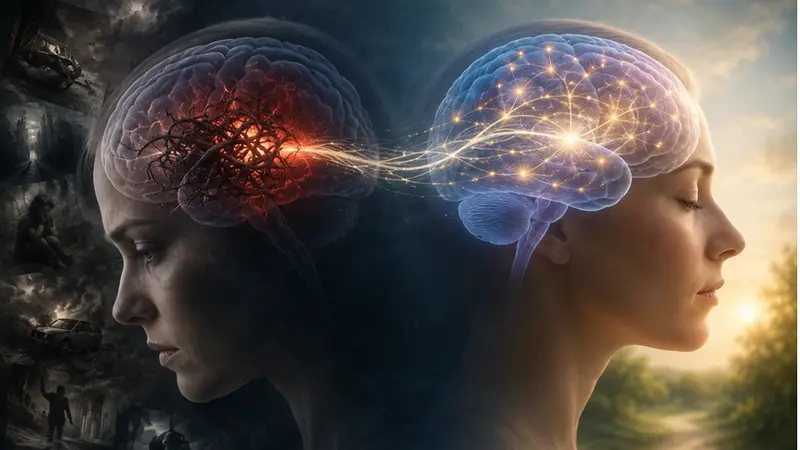
Most people would agree that there is always an event that they find extremely hard to forget. Some memories bring positive emotions, while others might be associated with a lot of negativity. There are many experiences for Australians that never seem to leave the mind. People refer to those experiences as “stuck memories.” Such memories could pop up unexpectedly after hearing a particular sound or smelling a specific scent. As a result, one could find themselves immersed in the exact same emotions that they had before.
To understand the issue of why some memories keep returning, a person needs to look further into the functioning of the brain. Fortunately, nowadays, neuroscience gives quite accurate answers regarding the way that we process experiences in general. Hence, by exploring what happens to the brain during the processing of events, one will be able to figure out how to get rid of the issue.
How Does the Brain Store Stuck Memories?
Whenever someone experiences an event that causes high levels of stress, their brain’s ability to record it gets disrupted. The reason is that the amygdala starts to signal the body about danger. The brain tells the body to get ready to fight or flee. In addition to that, it increases the amount of adrenaline and cortisol produced by the adrenal glands. As a result, the hippocampus, which should file and sort all memories logically fails to do so.
Hence, a person will keep having the sensation that a particular experience happened only today. Moreover, such memory will become more intense over time since the brain continues trying to file it. It leads to a constant cycle of negative emotions.
Treatment Approaches for Stuck Memories
The good news is that feeling stuck with one particular memory is treatable. Therefore, there is no need to suffer from it anymore. Different treatment techniques, such as Eye Movement Desensitization and Reprocessing (EMDR), allow people to change their memories positively. In the case of EMDR therapy in Melbourne, a specialist will encourage patients to think about the troubling memory while experiencing some type of bilateral stimulation. In other words, it will help the brain to integrate and neutralise the memory.
Another great way to relieve the emotional distress associated with a particular memory is Cognitive Behavioural Therapy (CBT). As part of CBT, therapists teach their patients to notice and eliminate any negative thoughts that arise. Somatic therapy and other methods help release all the emotional tension that trauma left inside the body.
Neuroplasticity Concept
All the above-mentioned treatments can be effective only because of a concept called neuroplasticity. Initially, it was believed that the adult brain had a limited ability to change. Nowadays, experts know that humans’ brain changes constantly by creating new neural connections. Hence, it means that it is possible to reprogram one’s brain.
Whenever a person starts treatment for stuck memories, the brain rewires itself in a positive way. It does not erase traumatic memories, but it strips them of their emotional value. As a result, the brain understands that the threat has already passed and that it is safe to file the memory correctly.
Hope and Help Moving Forward
Being stuck with negative memories can cause a lot of suffering. Nevertheless, knowing about the brain’s abilities allows people to find hope for recovery. One needs to understand that there is nothing wrong with their brain. It is only trying to protect its owner from potential dangers. Everyone is able to help their brain do that. It means that there is no shame in asking a specialist for help.